Fintech has a trust problem before it has a language problem.
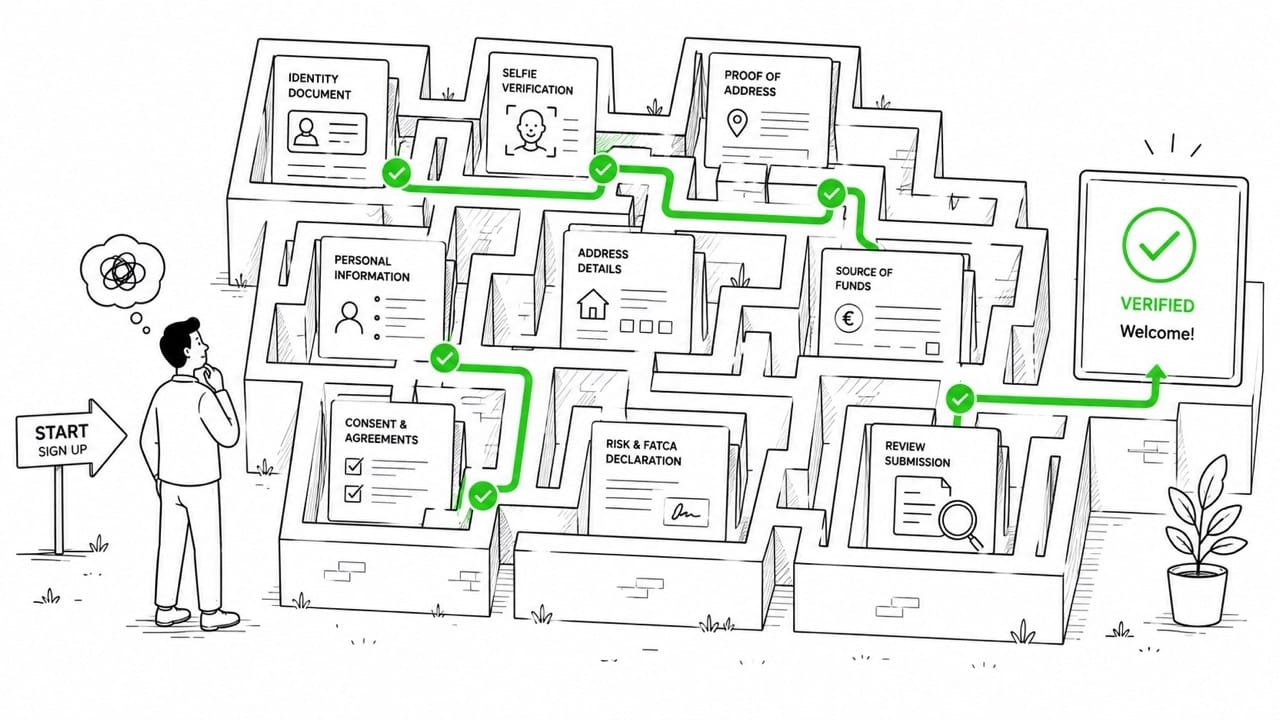
People don’t casually hand over bank details, ID documents, salary data, crypto wallets, or investment decisions to an app that feels even slightly off. In financial services, awkward wording isn’t just ugly. It can make users hesitate, abandon onboarding, or contact support before they’ve even completed the first useful action.
That’s why fintech localization needs to sit closer to product, the user interface and UX, compliance, and market research than most companies expect. Good localization helps fintech companies adapt their product experience to the habits, regulations, payment methods, financial terminology, and risk tolerance of each target market.
So for a fintech app, fluent copy is only one layer. The deeper question is whether the product feels understandable, credible, and safe enough to use.
Why Fintech Localization Matters for Global Growth
Fintech products live or die in moments of hesitation. A user sees an unfamiliar payment method, a vague fee description, an odd currency format, or a confusing identity-check instruction, and trust drops.
That friction really matters because financial technology products ask for unusually sensitive actions. Users may need to connect a bank account, upload their ID, transfer money, approve a transaction, or make a decision about savings, credit, insurance, investment, or blockchain assets. Every unclear phrase adds weight to the decision.
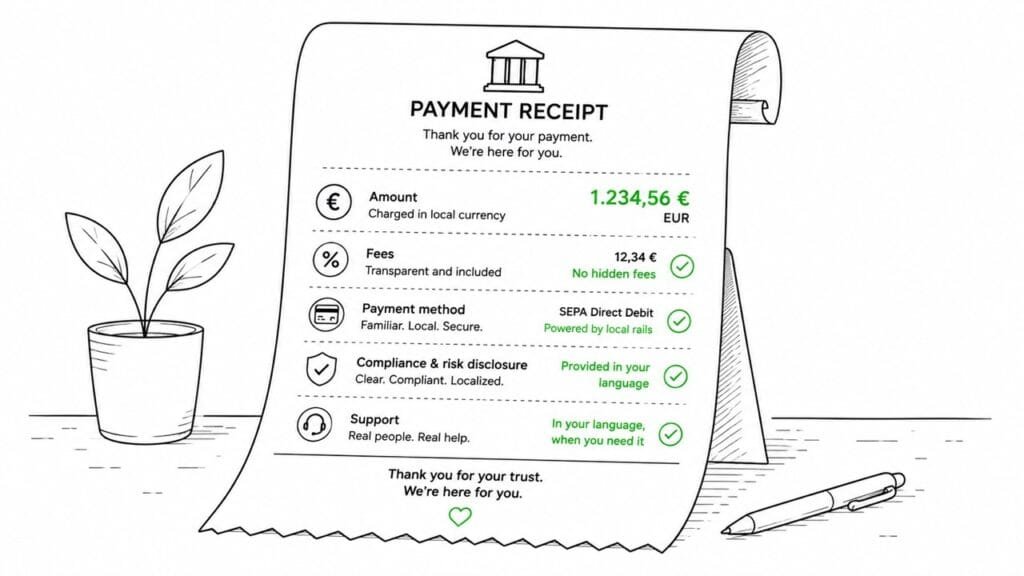
Fintech localization goes beyond translation because money habits are local. The same flow can feel normal in one market and suspicious in another. A German user may expect SEPA language and bank-transfer options. A user in India may expect UPI. A US user may be more familiar with card-first payment flows. Those expectations shape onboarding, conversion, support load, and retention.
Localization bridges the gap between a global fintech platform and the local financial reality of the people using it.
What a Localization Strategy for Fintech Companies Should Cover
A practical localization strategy for fintech companies should start before the product is “ready for translation.” By that point, the team may already have hard-coded assumptions about forms, payment methods, verification steps, decimal formats, address fields, legal copy, and support workflows.
A serious localization process should cover:
- Product UI: buttons, labels, menus, tooltips, error messages, forms, and transaction flows.
- Financial terminology: balances, fees, limits, interest, deposits, transfers, withdrawals, and risk-related wording.
- Local formats: currency, dates, decimals, addresses, phone numbers, tax fields, and identity documents.
- Payment infrastructure: local payment method expectations and market-specific transaction habits.
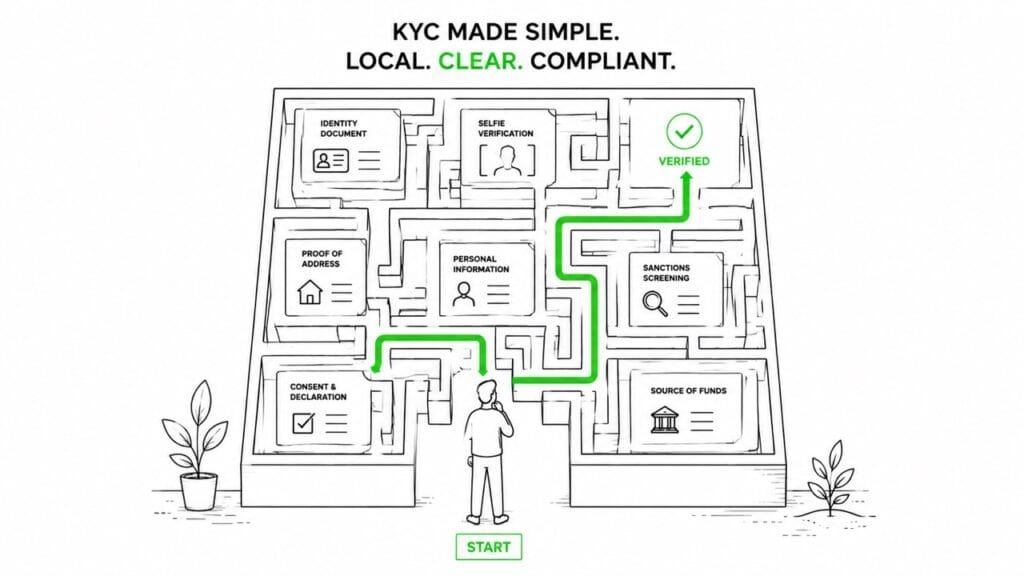
- Compliance content: terms, disclosures, KYC flows, AML explanations, and regulator-facing requirements.
- Support content: help center articles, chatbot flows, email templates, and customer support scripts.
- Marketing content: landing pages, app store copy, onboarding emails, and conversion-focused product messaging.
This work needs more than a translator receiving isolated strings in a spreadsheet. It needs context, screenshots, product logic, terminology management, translation memory, review workflows, and clear ownership across product, engineering, UX, compliance, and of course the localization itself.
Common Challenges in Fintech Localization
The hardest localization challenges in fintech usually aren’t caused by obscure vocabulary. They come from context, risk, and speed.
A short English string like “available balance” can be deceptively tricky. Does it mean the user can spend the money now? Is part of it pending? Has a transfer cleared? Could the amount still change? Without product context, even a good linguist can choose wording that sounds plausible and still misleads the user.
Compliance adds another delicate layer. Local financial regulations affect what has to be explained, how clearly it must be explained, and where exactly the explanation has to integrate in the user journey. Regulators care whether users receive accurate, understandable information in the specific market the product operates.
Speed also creates its own set of issues. Fintech and SaaS companies are agile, they ship constantly. When the localization workflow sits outside engineering and content management systems, translated content goes stale fast. Continuous localization helps by connecting product strings, translation software, translation memory, review steps, and release cycles.
Quality control is the final pressure point. Machine translation and AI translation can help with volume, but unreviewed machine output is a poor fit for legal copy, transaction interfaces, risk warnings, and high-value account actions.
Where AI Translation Helps, and Where It Doesn’t
AI translation can be useful in a fintech localization setup. It can speed up first drafts, support internal documentation, process lower-risk support content, and help teams manage large volumes of multilingual material.
But fintech content needs guardrails. AI shouldn’t be left alone with regulatory disclosures, legal agreements, transaction flows, error messages, onboarding steps, or sensitive account actions. These areas need explicit terminology control, product context, and human review.
The strongest setup is usually hybrid. AI handles selected volume. Translation memory keeps recurring phrases consistent. A professional linguist or financial translator reviews customer-facing and compliance-sensitive copy. Product and compliance stakeholders stay involved when wording affects user trust, legal clarity, or conversion.
That gives fintech companies a fair amount of speed to build trust, without pretending every string carries the same level of risk.
Market Research Matters Before You Localize
Good localization starts with market research. Before adapting financial technology products for a new market, fintech companies gain an in-depth understanding of how local users already manage money, which payment methods they trust, what terminology they expect, and where the product may create hesitation.
Financial behavior doesn’t travel neatly across borders. A workflow that feels seamless in one market may feel strange in another. A feature that seems self-explanatory to the product team may need extra explanation in a specific market. A familiar English term may have no clean equivalent in the local language, and so on.
Market research helps you decide what to translate, what to rewrite, what to explain, and what to adapt for the target market.
Building a Scalable Localization Workflow
A scalable localization workflow connects people, tools, and decisions. For fintechs, that usually means product strings flow from the codebase or design system into translation software, translators and reviewers can see context, and approved translations return cleanly to the product.
A good localization setup should include:
- a shared glossary for financial terminology
- translation memory for consistency
- screenshots or design previews for UI context
- clear review rules for high-risk content
- ownership across product, compliance, UX, and l10n
- a release process that supports continuous localization
This is where fintech localization services can make a real difference. Their value isn’t just in delivering translated files, but in building a scalable workflow that can handle product updates, new market launches, support content, and ongoing optimization without chaos.
Fintech Localization Services for Global Expansion
Fintech localization affects whether users understand the product, trust the product, and keep using the product after the first session. For fintechs planning global expansion, localization services can support app localization, software localization, website translation, UX copy, support content, terminology, review workflows, and multilingual launch planning.
A strong localization strategy helps you enter a new market with clearer customer communication, fewer avoidable mistakes, and a product experience that feels built for the people using it.
Let’s work together
At Modilingua, we help indie developers, SaaS teams, and early-stage startups approach localization in a practical, product-aware way. If you’re preparing an app, platform, or digital product for another market, we’ll help you identify what needs translating, what needs adapting, and how to set up a localization workflow that fits your product, UX, and release cycle.
