

Content localization is often treated as a final production step: write content in one language, send it for translation, publish the result, and move on. That approach may work for basic information, but it’s rarely enough for brands that want to build trust with a global audience or user base.
When content crosses borders, it carries not just words, but assumptions, cultural references, formatting choices, examples, product claims, humor, tone, visuals, and expectations about how people make decisions. A literal translation can preserve the sentence yet lose the entire message.
Adapting content is important so that it fits a specific target audience, target market, platform, and context. It’s the only way to really reach diverse audiences without making every market feel like an afterthought.
So for SaaS companies, startups, and digital businesses, content localization isn’t just a language task, but a part of how customers experience a brand. That makes it part of the overarching content strategy, as opposed to merely a production task at the end of the publishing cycle.
Website copy, landing pages, help articles, user interface (UI) text, video, media, and social media posts all influence whether people understand the offer, trust the company and feel confident taking the next step.
When Translation Preserves Words but Loses Meaning
Translation answers the question: what does this say in another language?
Content localization answers a broader question: will this content make sense, feel credible, and motivate action in this market?
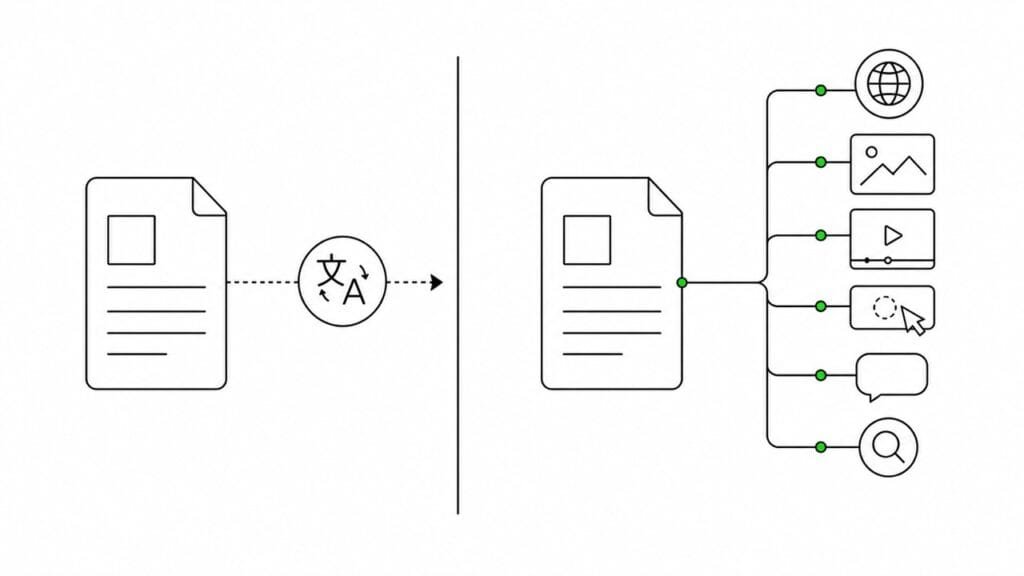
The difference matters because language is only one part of communication. A phrase may be linguistically correct but still sound odd, too casual, too formal, too American, too corporate, too vague, or too sales-heavy. An idiom might translate badly. A slogan could lose impact. A landing page may need different proof points. Maybe a pricing message requires more context, or a product video needs new subtitles, different screenshots, or adjusted on-screen graphics.
Content localization can include linguistic choices, visuals, formatting, currencies, units of measurement, cultural nuances, legal references, product terminology, search intent, and user experience (UX). It may involve adapting written content, video scripts, subtitles, product screenshots, graphics, email sequences, help content, or a UI.
☞ Good localization doesn't make content bland. It protects the original gist while making the local version feel natural. A content localization service should therefore protect meaning, tone, usability, and local relevance, not just deliver translated files.
Local Relevance Builds Trust
People judge a brand faster when the content is in their own language, but language alone is not the whole story. Localized content reduces uncertainty because it gives users the signals they expect: familiar terminology, relevant examples, clear product information, natural tone, and proof that the company understands the market.
For an international audience, content is often the first real contact with a brand. A search result, blog article, product page, video, support answer, onboarding screen, or single email can shape the entire first impression. If the content feels imported, generic, or even just slightly off, the brand loses credibility before a sales conversation even begins.
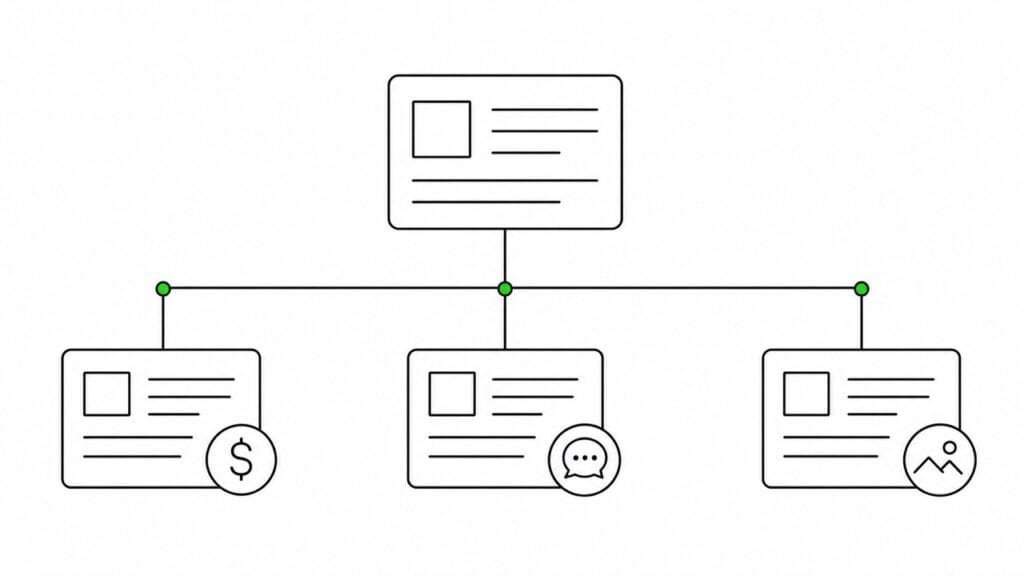
CSA Research still frames language preference as a core variable in international revenue planning. Its Global Revenue Forecaster is built around the premise that customers prefer products and services in their own language, and combines language-preference research with market data such as GDP, population, income, and internet penetration. For content localization, the takeaway is simple: language isn’t decoration. It affects whether people can evaluate, trust, and act on content.
For digital companies, content localization also supports search engine optimization. People in different languages and regions don’t always search for the same concept in the same way. Local search behavior, terminology, product category names, and content expectations can differ sharply across international markets.
A localized content approach helps close that gap. It gives each market content that reflects how people actually think, search, compare, and decide. At a higher level, this is where a localization strategy connects market goals with the content people actually encounter.
Types of Content You Can Localize
The types of content you can localize go way deeper than website pages.
Written content is obviously the starting point. This includes blog posts, landing pages, email campaigns, product descriptions, newsletters, sales pages, case studies, white papers, help articles, knowledge base content, onboarding content, and legal information.
But content localization also applies to product and interface content. Buttons, labels, menu items, tooltips, error messages, empty states, checkout flows, confirmations, and notifications all shape the user experience. A clear UI in one language can become cramped, confusing, or inconsistent in another if the content is only translated string by string.
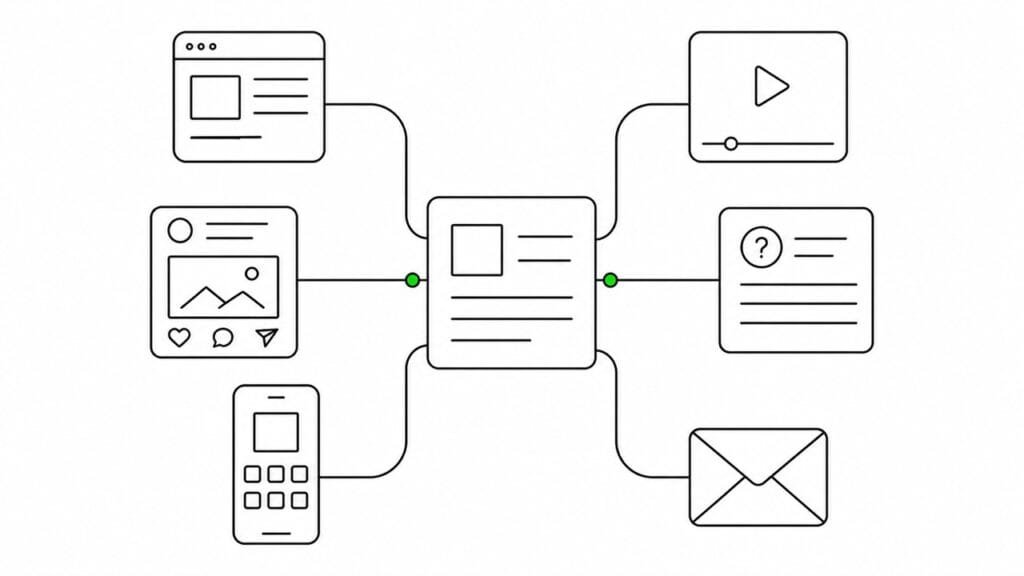
Then there is media localization. Images, graphics, screenshots, icons, charts, diagrams, audio, and video all need review more often than not. A symbol, color, image, example, gesture, or visual metaphor may feel normal in one market and confusing in another.
Content localization also covers marketing localization, content translation, multimedia content, training materials, social media posts, advertising assets, app store listings, and sales enablement content. In practice, basically any content asset that influences understanding, trust, or conversion can be a content candidate for localization.
Media, Multimedia, Video, and Digital Content Localization
Digital journeys are typically fragmented, which makes digital content localization all the more important. A customer may move from a search result or Google Discovery to a blog post, from that blog post to a product page, from the product page to a video, from that video to a help article, and then back into the UI.
If each touchpoint sounds different, trust weakens!
Media localization makes that challenge more visible. Video localization, for example, is not just a matter of translating a script. Subtitles have to fit reading speed. Voice-over needs to match timing. On-screen text may require redesign. Screenshots might need localized product views. Captions will make accessibility review necessary. And thumbnails and titles have to include local search terms.
Multimedia content also creates format constraints. Strings may be longer in one language than they are in another, causing issues with any width constraints in the UI. A subtitle might not have enough space. A graphic could contain embedded text that someone forgot to have translated, much like product screenshots that include UI labels which need localization. Or maybe a training video mentions a legal process that differs by market.
These details all sound small… until they accumulate. Poorly localized media makes a polished brand look careless. Strong media localization keeps the message coherent across formats.
Content Localization Reduces Friction
Content localization improves the parts of the content experience that decide whether people keep reading, keep clicking, or quietly churn. It affects how quickly users understand the offer, how much confidence they have in the brand, and whether the next step feels natural in their market. In practice, this usually shows up in five ways.
- First, content localization improves basic comprehension. People understand the offer faster when the content uses familiar language, examples, terms, and structures. And that matters for product pages, help content, onboarding, and conversion-focused content marketing.
- Second, localized content supports credibility. A company that invests in local relevance is clearly signaling that the market matters. That in turn can influence customer satisfaction, loyalty, and sales, especially when competitors rely on generic translated content.
- Third, localization massively improves the overall user experience. A localized UI, clear support content and adapted onboarding material significantly reduce friction. Users don’t have to mentally translate unclear labels, foreign examples, or unfamiliar assumptions.
- Fourth, content localization supports revenue. When people understand value, trust the message, and can navigate the product or website comfortably, they are more likely to take action. The content does not carry the whole sales process, but it does remove avoidable doubt.
- Finally, content localization helps brands scale more coherently. When terminology, tone, and messaging are handled with care, language versions feel connected rather than improvised. The strongest content localization strategies support that coherence without forcing every market into identical wording.
Common Challenges of Localization Strategy
Typical localization pitfalls often begin with the source content itself.
Some is hard to localize because it’s ambiguous or simply unclear in the original language. Some relies too heavily on idioms, humor, cultural assumptions, or market-specific examples. Or it’s scattered across too many systems, or lacks an owner. And then there are the aforementioned assets which many tend to forget: the graphics, PDFs, videos, or product screenshots where text is difficult to extract and update.
Another common problem is treating all content as equal. A legal notice, a product page, a brand campaign, a help article, a UI label, and a social media post do not necessarily need the same localization approach. Some content calls for more refined precision. Some needs adaptation. Some will need to be completely rewritten or have to be reviewed by Legal. And then there’s the stuff that needs SEO review or additional design support. There are a lot of moving parts and teams involved.
Consistency is another challenge. When content is localized across different teams, tools, formats, and markets, terminology tends to drift. The same feature may be named three different ways. The tone may change from page to page. The brand message may become weaker with each hand-off.
Technical constraints can also create problems. A content management system (CMS) may not handle language versions well, or the UI doesn’t allow enough space for translated labels. A suboptimal localization workflow can separate translators from the context they need, which winds up costing more money. Content localization software can help, but software alone doesn’t fix poor source content or unclear ownership.
Context, judgment, and coordination are all instrumental.
The Role of Localization Teams, Workflow, and Software

As you can see, localized content rarely lives in one place.
It’s not all that uncommon to have marketing content in one CMS, product strings in another platform, help articles in a support tool, video assets in a media library, and legal content in separate documents. The problem is that without coordination of your content localization efforts, things quickly become a colossal mess.
A large localization team can include content creators, translators, reviewers, designers, product managers, SEO specialists, market experts, and other team members who understand the product context. In smaller companies, one person tends to cover most of these roles. Regardless of organization size, what matters is that someone understands the content and the target audiences.
A localization process should keep decisions visible. It clarifies who prepares the source content, who translates, who reviews, who approves terminology, who checks layout, and who publishes the final language versions.
Content localization software and localization management systems can support this work through translation memory, terminology databases, version control, review workflows, and integration with a CMS. These tools are useful when they support editorial quality and local relevance.
Local Relevance Is Where Global Content Earns Trust
Content localization helps global content feel specific enough for the people reading, watching, clicking, or using it. The strongest versions keep the brand recognizable while adjusting the details that shape local trust: examples, proof points, terminology, visuals, calls to action, formats, and expectations around tone.
Expand Your Reach with Expert Language Solutions
Partner with Modilingua for tailored content localization strategy, international SEO, and bespoke translation services. Break cultural barriers and grow your business in new markets with scalable, user-centric solutions.
That balance is important because people don’t experience a company through strategy documents. They experience it through content: the article they read, the video they watch, the button they click, the error message they see, the help page they rely on, and the product information they use to decide whether to buy.
Those who handle this well reduce friction between the brand and the market. The content resonates without forcing every audience through the same cultural filter. For companies with international ambitions, comprehensive localization becomes part of how trust is built across languages, markets, and media.
