
How to Estimate Localization Cost Before Requesting Quotes
A website, software product, app or marketing campaign might all need translation and review, but technical production, testing, project management and ongoing updates might also all be in order.
Before requesting quotes, it’s better to define the expected deliverables, who’ll review them, how the localized content will ultimately reach customers and who’s going to maintain it after launch. If you skip this step, you’re likely to receive several prices for what appear to be effectively different projects when they’re not.
Define the work behind the word count
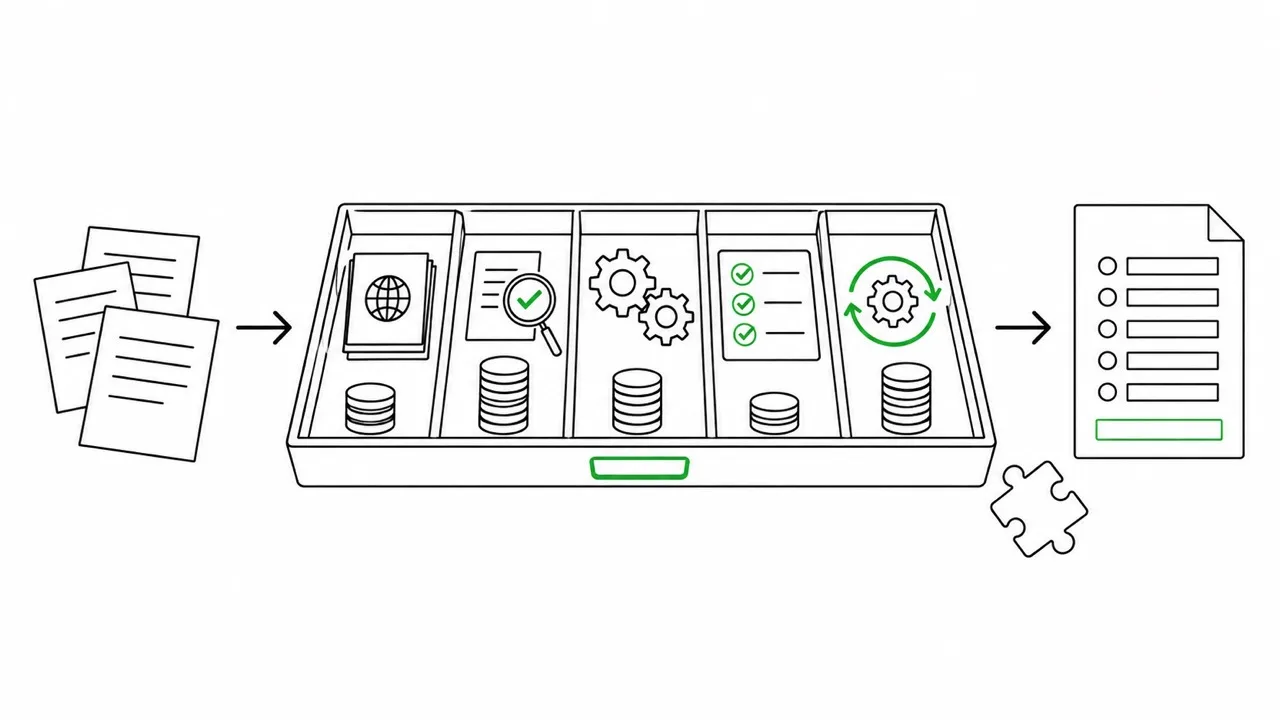
A common breakdown of localization costs includes translation, editing, proofreading, formatting or layout, linguistic and locale quality assurance, file or CMS production, project management and technology. A provider can bundle several of these tasks into one project fee or price them separately, so the quote needs to show where its responsibility starts and ends.
Translated text still has to be reviewed, added to the website or product, and ultimately tested in context. If the provider’s work stops when the files are delivered, your team needs to budget time and money for everything that happens afterwards, including maintenance and new content.
Common pricing models
Per-word or per-standard line pricing is easy to understand when the source text is stable and straightforward to count. It tells you much less when the project involves creative adaptation, interface limits, engineering, testing or frequent changes.
Per-page pricing can suit documents with a consistent format. Hourly pricing, day rates or retainers are more practical for project management, engineering, testing or slogan adaptation because that level of effort can’t be neatly tied to volume. A fixed project fee can also work when the deliverables, review rounds and acceptance criteria have already been agreed upon.
Always ask about the actual scope being provided when comparing offers!
Price the content and review it needs
Another thing to consider is that the exact same source volume can take a different amount of work depending on the languages, locales and content involved. Specialist terminology, regulated material, creative copy and strict interface limits can all require additional review from someone who understands the subject or market.
Ask which level of review the provider has priced and what happens if the source is incomplete, inconsistent or still needs changing.
Budget for implementation, testing and updates
Beyond word counts and volume, CMS handling, URL structure, hreflang, interface text, search terminology, testing and coordination with your development team is all work. For software, you also need to establish who’ll handle string extraction, integration, screenshots, builds and in-product testing. Some of that work can sit with the provider, while the rest might be better of staying with your internal team.
Deadlines and post-launch changes need to be priced as well. Rush surcharges and maintenance fees are factors that can, of course, increase localization costs. So ask how much faster delivery runs, whether a quote covers the launch alone or any additional maintenance, and how the provider will charge for future updates.
Compare quotes on the same scope
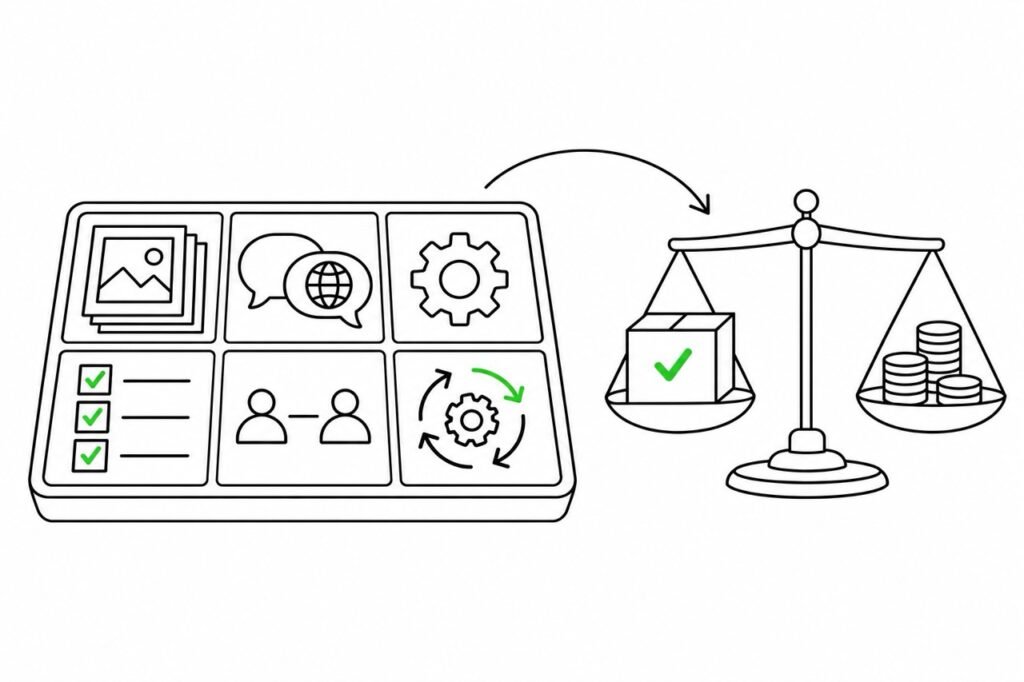
I wouldn’t compare headline rates until you’ve actually given every potential provider the same scope to calculate from. So send them identical briefs, then check what they’ve included, what they’ve excluded, and what they expect your team to handle internally.
Ask for an itemized quote so you can see what is and isn’t part of the price. Cross-check how the provider defines its pricing unit, how many review and correction rounds are included and what would trigger any extra charges. Source changes, additional locales, rush delivery and post-launch updates should have a clear pricing method too.
That makes it much easier to compare providers on like-for-like scope instead of choosing the lowest number you googled only to later discover it covers translation but not all the work required to publish and stay afloat.
Ask about the tech stack
Technology can reduce repeated work, but the provider should explain where it fits in. Translation memory, glossaries, localization platforms and machine translation for lower-priority content are just some ways to reduce localization cost.
“AI-powered” or “automated” isn’t a sufficient description of a workflow though. Don’t be afraid to ask what type of content will go through each tool, who will review and who’s accountable for terminology, tone and errors. A low-risk support article and a customer-facing product claim don’t necessarily have to be piped through the same process.
It can also be useful to request a comparison with a human-led workflow. There could be a cost savings from reusing approved translations and fuzzy matches, curating content more carefully or even just improving the handoff between teams.
Build the estimate from known work
To sum up, start with an inventory of your source content, target languages, locales and proposed pricing units. Make a note of the known source volume and apply the relevant unit rate for each language or locale. Then add any work that’s been priced separately, e.g. review, project management, technical implementation and testing.
Separate the initial launch from recurring updates and maintenance. They answer different budget questions and might not even use the same workflow or pricing model.
Finally, determine any open ends: whether the source is final, specialist review is required, technical access is ready and who owns acceptance testing. Ask the language service provider to price the main alternatives instead of burying any uncertainties inside some vague contingency clause, and don’t forget to capture your own team’s responsibilities in the total budget.
