

Many YouTubers inadvertently cap their growth because they treat YouTube as a single-language channel.
Because YouTube is localized across 80 languages in over 100 countries, and market research shows consumers prefer using their own language online, a large share of YouTube search activity can be expected to occur in local languages rather than English. If you’re strictly publishing in one language, you’re leaving views, engagement, and possibly even significant revenue on the table.
YouTube localization entails more than just adding a subtitle track; it’s actually a comprehensive strategy involving dubbing, localizing video metadata, and making sure cultural references land well. Historically, this was a manual, expensive process reserved for corporate media giants. Today, with the maturation of AI translation and voice synthesis, video localization is very accessible to independent businesses.
Here’s the gist of how you can use localization and translation to scale your YouTube channel and connect with a worldwide viewer base that’s searching in their own language.
Why YouTube Localization is Essential for Channel Growth
The premise is straightforward: people engage more deeply with content in their native tongue. When you localize your video assets, you’re not just improving accessibility, but signaling to YouTube’s algorithm that your content is highly relevant to a specific international market.
Reaching a Wider Audience
While English is a lingua franca, it’s not the primary language for billions of internet users. High-growth markets speaking Spanish, Hindi, Mandarin, and Portuguese represent a massive opportunity for expansion. By adapting your content in multiple languages, you unlock access to these demographics.
For example, a video explaining a SaaS product might struggle for visibility in the US. That same video, when adapted for the Hindi or Spanish market, often faces less competition and can drive higher volume for a fraction of the ad spend. YouTubers and content strategists who ignore these segments are competing in saturated markets while neglecting blue ocean opportunities.
The ROI of Localizing Your Content
A common objection is that video localization is cost-prohibitive. Years ago, this was valid. You had to hire a studio, voice actors, editors, the whole shebang. Modern AI-driven methods have lowered the barrier to entry though.
The ROI comes from extending the shelf-life and reach of your existing library. Instead of filming a new video from scratch, you upload a localized version of a high-performing asset. This leverages your existing production effort to capture a new target audience. Even channels with a few thousand subscribers can use this approach to emulate the growth tactics of a YouTuber who set out to get one million subscribers and wound up with closer to 500M: MrBeast.
Localizing Video Metadata and Search Discovery
You can have the best dubbed video in the world, but no one will find it if the title and description remain in English. This is where translating video metadata is super important for SEO.
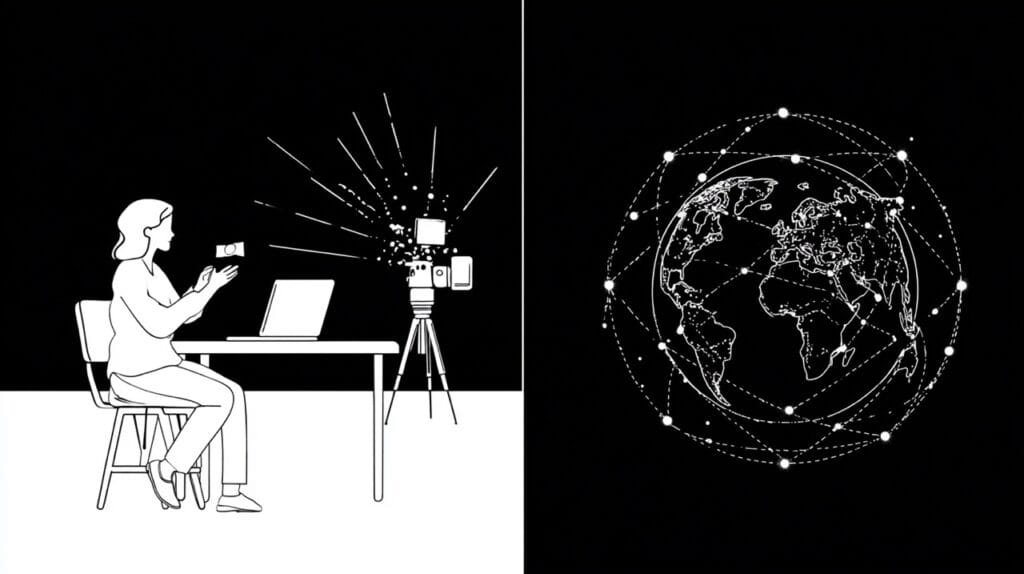
Optimizing Titles, Descriptions, and Tags
To rank in search results in Brazil, for example, your metadata, i.e. title, description, and tags, need to be in Brazilian Portuguese so that when a user does a search, your video appears as a relevant result.
Try to avoid literal translation here. Identify the keywords that target language speakers actually use. For instance, a direct translation of “tutorial” might not be the search term a viewer in Argentina types when looking for a “how-to” guide.
Tools for Metadata Management
Managing metadata across multiple languages can be tedious without automation. Tools like VidIQ and TubeBuddy have become industry standards for this workflow. VidIQ is good at analytics and keyword research for more clarity around search volume in different regions. TubeBuddy is often favored for its bulk processing capabilities that let you update descriptions across hundreds of videos simultaneously.
Audio Strategy: Dub, Voice, and Multi-Language Audio
The gold standard for retention is audio. While subtitles help, a dub allows for passive consumption and higher retention rates.
Leveraging YouTube’s Multi-Language Audio (MLA)
A major platform feature rollout is YouTube’s Native Multi-Language Audio (MLA). It lets content creators upload multiple audio tracks (e.g., French, Spanish, Japanese) to a single video file. So instead of fragmenting your view count across five different channels, all traffic consolidates on one video. This signals high engagement to the algorithm and can help boost the video’s visibility.
AI vs. Human Dubbing Options
You do not need a Mr. Beast budget to dub your content.
- AI dubbing tools like ElevenLabs offer really impressive voice cloning and translation. Another tool, Rask AI even handles lip-syncing, so there’s less of that awkward disconnect between audio and visual known as the “uncanny valley.”
- Human dubbing is good for high-stakes brand messaging, as human actors are still superior for capturing emotional nuance.
- A hybrid approach is also feasible. Some startups, for example, use AI for their help library and humans for their main commercial content.
Subtitles and Visual Content Adaptation
While audio is powerful, you can’t ignore the visual aspect of localization.
Captions for Accessible Viewing
A subtitle or caption track is, so to speak, the minimum viable product for localization. It makes content accessible to the deaf and hard of hearing, as well as people watching on mute. Services like HappyScribe can provide a decent middle ground between AI speed and human accuracy. Keep in mind though that a bad caption can confuse viewers and hurt retention, so always review the output.
Localizing Thumbnails
Visual context matters, too. Thankfully, YouTube now allows localized thumbnails, so make use of this feature. A native viewer is significantly more likely to click a thumbnail that they can instantly read and understand. And this helps you engage a fan base that might otherwise scroll past your content.
YouTube Localization FAQ
How do I start localizing if I have a small budget?
Start with localizing video metadata (titles and descriptions) and adding subtitles. These are low-cost, high-impact actions. As you see revenue or increased traction from those regions, reinvest into AI dub services.
Does YouTube auto-translate video content?
Google and YouTube provide auto-generated captions, but they’re often inaccurate. They don’t automatically dub voice or translate metadata effectively for SEO. You’ll have to actively manage this strategy.
Which languages should I target first?
Check your channel analytics! See where your current traffic is coming from. If you see 5% of your views coming from Mexico, for example, Spanish would be an obvious first target.
Unlocking Global Growth with Video Localization
YouTube localization is one of the most underutilized levers for growth in the current digital landscape. By taking the time to localize your video, translate your metadata, and speak to a global audience, you transform your channel from a local repository into an international media asset.
Don’t let the technical aspect intimidate you. Regardless of which tools you land on for audio, they all exist to make the process more seamless. Start with one target language, measure the results, and expand from there.
